
Table of Contents
One of the most important decisions in any bulkhead project is selecting the right construction material. While the design of the structure plays a major role in shoreline protection, the material itself determines how the bulkhead performs under continuous exposure to water, changing weather conditions, soil pressure, and long-term environmental stress.
Different waterfront environments require different solutions. A material that performs well on a calm residential lake may not be the best choice for a shoreline exposed to stronger wave activity or more demanding soil conditions. Property owners who want to better understand available shoreline protection systems can learn more.
Why material selection matters
The primary purpose of a bulkhead is to stabilize the shoreline and prevent soil erosion. However, the ability to perform this task over many years depends largely on the materials used during construction.
- Durability affects lifespan – different materials age differently when exposed to water, sunlight, and changing temperatures.
- Maintenance requirements vary – some systems require more frequent inspections and repairs than others.
- Structural strength differs – certain materials handle higher loads and stronger shoreline pressures more effectively.
- Appearance influences property aesthetics – material selection can significantly affect the visual character of the waterfront.
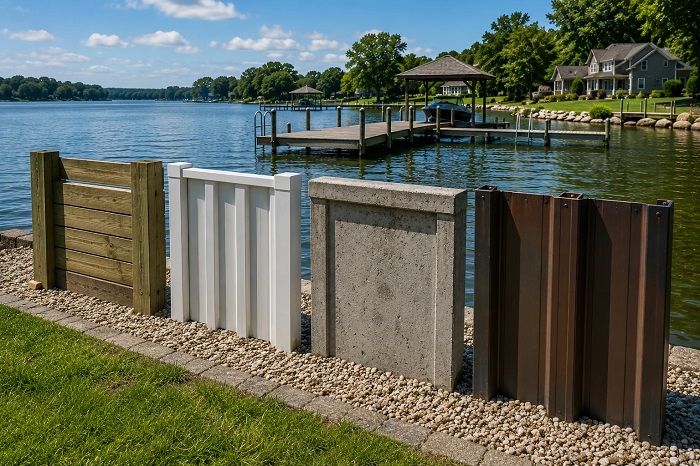
Wood bulkheads
Wood remains one of the most recognizable and widely used bulkhead materials for residential waterfront properties.
Advantages of wood
- Natural appearance – timber blends well with residential landscapes, docks, and natural shoreline environments.
- Traditional waterfront style – many property owners prefer the classic look associated with wood structures.
- Flexible design options – wood can be adapted to many shoreline layouts and property types.
Considerations
- Exposure to moisture – long-term contact with water gradually affects material condition.
- Maintenance requirements – periodic inspection and repairs are often necessary.
- Shorter service life compared to some alternatives – environmental conditions may influence longevity.
Vinyl bulkheads
Vinyl has become one of the most popular modern materials for shoreline stabilization because of its durability and low maintenance requirements.
Advantages of vinyl
- Resistance to rot and moisture – vinyl does not deteriorate in the same way as natural wood.
- Low maintenance – long-term upkeep requirements are generally reduced.
- Consistent appearance – color and surface condition remain stable over time.
Considerations
- Higher initial investment – installation costs may be greater than some traditional materials.
- Different visual style – some owners prefer natural materials instead.
Concrete bulkheads
Concrete systems are commonly selected when strength and long-term durability are major priorities.
Advantages of concrete
- Exceptional structural strength – capable of handling significant shoreline loads.
- Long service life – concrete structures can perform for decades when properly designed.
- Strong resistance to environmental stress – suitable for demanding conditions.
Considerations
- More complex installation – construction often requires specialized planning and equipment.
- Higher project costs – stronger systems typically require larger investments.
Steel bulkheads
Steel systems are often used where maximum structural performance is required.
Advantages of steel
- High load capacity – suitable for demanding shoreline environments.
- Strong structural performance – capable of supporting significant soil pressure.
- Effective in commercial applications – often used where durability is critical.
Considerations
- Environmental exposure must be considered – material protection is important for long-term performance.
- Installation complexity – steel systems typically require specialized construction methods.
How to choose the best material
- Evaluate shoreline conditions – water movement and soil stability influence material requirements.
- Consider long-term maintenance – ownership costs extend beyond initial installation.
- Define project goals – appearance, durability, and budget should all be considered.
- Think about lifespan – different materials provide different long-term performance characteristics.
- Match the solution to the environment – the best material depends on site-specific conditions.
There is no single bulkhead material that is ideal for every waterfront property. The best solution depends on shoreline conditions, project goals, maintenance expectations, and long-term performance requirements.
Understanding the strengths and limitations of wood, vinyl, concrete, and steel helps property owners make informed decisions and select a bulkhead system that provides reliable shoreline protection for many years to come.