
Table of Contents
Fuerteventura rewards drivers who venture beyond the resort strips. I’ve logged over 2,000 kilometers exploring this island, and the best discoveries always happened off the main tourist circuit. A rental car opens up a completely different Fuerteventura than what package tours show you.
Cofete Beach and the Western Coast
Cofete sits at the end of a 20-kilometer dirt road that winds through the Jandia mountains. The beach stretches for 12 kilometers of empty sand, backed by dramatic peaks. Getting there requires a capable vehicle and about 45 minutes from Morro Jable.
The drive itself is half the experience. You’ll climb past abandoned farmhouses and goat herds before dropping down to the coast. Park near the small settlement and walk to the beach. Bring water and snacks because there’s nothing out there.
Weather shifts fast on this coast. Morning calm can turn to afternoon wind in minutes. Check conditions before making the trip.
Betancuria: The Mountain Village
Betancuria served as Fuerteventura’s capital for over 400 years. Tucked in a valley between volcanic ridges, it offers a glimpse of old Canarian life. The church of Santa Maria dates to 1410, though pirates destroyed and rebuilt it several times.
Small museums dot the narrow streets. Casa Santa Maria houses archaeological finds and local crafts. The town has three restaurants where locals actually eat, serving traditional dishes like goat stew and papas arrugadas.
Park in the main lot below town and walk up. Streets are too narrow for comfortable driving, and you’ll want to explore on foot anyway.
Corralejo Dunes Natural Park
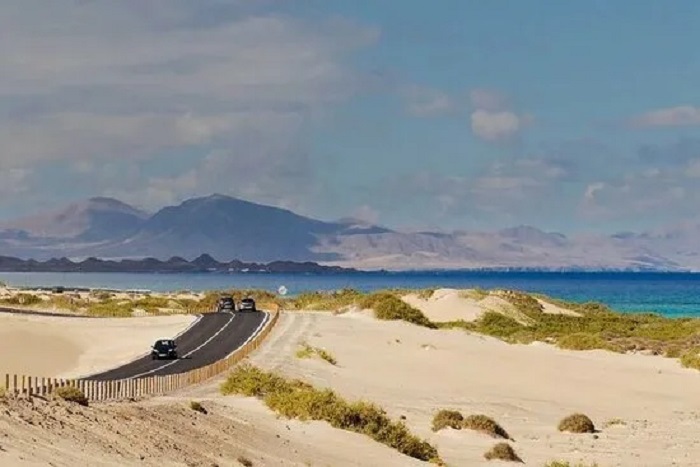
Ten kilometers of rolling sand dunes separate Corralejo from the airport. The protected park looks like the Sahara dropped into the Atlantic. Turquoise water laps against white sand, creating postcard views.
Multiple access points line the FV-1 highway. Each offers different beach characteristics:
- Northern sections get strong wind, perfect for kitesurfing
- Central areas provide calmer swimming conditions
- Southern spots near El Burro beach attract fewer crowds
- Sunset viewing works best from western-facing dunes
Parking is free but fills up by 11 AM during summer. Arrive early or visit after 4 PM for guaranteed spots.
El Cotillo and the Lagoons
El Cotillo remains one of Fuerteventura’s most authentic fishing villages. The harbor still works as a real port, not a tourist attraction. Local boats unload their catch each afternoon, and restaurants buy directly from fishermen.
North of town, a series of natural lagoons formed by lava rock create protected swimming pools. Los Lagos (The Lakes) offer crystal-clear water even when ocean waves crash nearby. Kids can safely play in shallow areas while adults explore deeper sections.
The lighthouse at Faro del Toston guards the northwestern point. A small museum inside explains maritime history, but the real draw is the coastline view.
Ajuy Caves and Black Sand Beach
Ajuy’s black sand comes from volcanic rock ground down by centuries of waves. The beach itself is small, but the caves cut into seaside cliffs make it special. These aren’t tourist caves with lighting and guides. You walk in, explore, and walk out.
A wooden walkway leads from the village to the cave entrance. The path takes 10 minutes and offers good photo opportunities. Inside, the caves stretch back about 100 meters. Bring a phone flashlight.
Two seafood restaurants face the beach. Both serve fresh fish grilled over open flames. Prices beat tourist zone restaurants by 40%.
Practical Driving Routes
| Route | Distance | Drive Time | Road Condition |
|---|---|---|---|
| Corralejo to Cofete | 95 km | 2 hours | Paved + dirt track |
| Puerto del Rosario to Betancuria | 28 km | 35 minutes | Mountain road, paved |
| Caleta de Fuste to Ajuy | 42 km | 45 minutes | Good paved roads |
| Morro Jable to El Cotillo | 110 km | 1.5 hours | Highway quality |
La Oliva and Art Scene
La Oliva anchors the northern interior with its artistic community. The Casa de los Coroneles, a colonial mansion from the 1700s, dominates the town center. Free entry gets you access to multiple rooms showcasing period furniture and island history.
Several galleries display work by local artists. Prices for paintings and sculptures run lower than resort shops, and you’re buying directly from creators.
The nearby Centro de Arte Canario hosts rotating exhibitions in a converted farmhouse. Check their schedule before visiting as opening hours vary seasonally.
Popcorn Beach (Playa de los Clicos)
North of Corralejo, near Majanicho village, this beach earned its nickname from thousands of white coral fragments that look like popcorn kernels. The “popcorn” isn’t actually coral but rather skeletal remains of Rhodolith algae.
The beach sits at the end of a rough track. Standard cars can make it, but drive slowly. No facilities exist here, so pack everything you need.
These spots represent just a fraction of what Fuerteventura offers drivers. Having your own transport, especially options that don’t require deposits or credit cards like those at https://findycar.com/car-rental-fuerteventura/, means you control your schedule and discoveries. The island reveals itself to those willing to leave the coastal highway and explore the roads less traveled.