
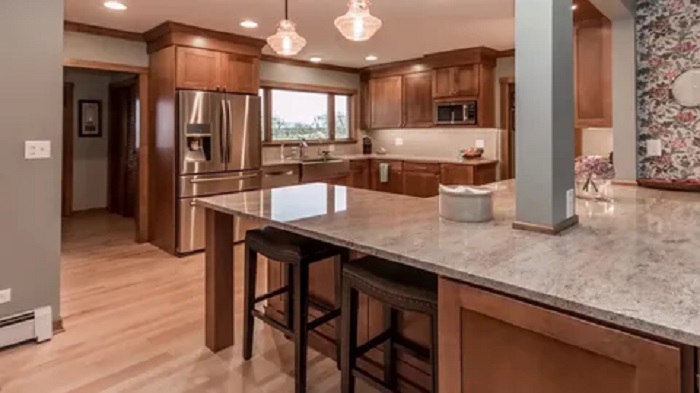
A successful home renovation is not simply a collection of separate products. Flooring, cabinets, countertops, tile, wall colors, lighting, doors, and furniture all work together to create the final impression. When these materials are selected separately, the interior may feel unbalanced. When they are planned together, the home looks more thoughtful, harmonious, and complete.
Flooring is one of the largest visual surfaces in any room. It affects the overall tone of the interior and often becomes the foundation for other design decisions. A light floor can make a space feel open and airy. A warm wood tone can add comfort and natural character. A darker floor can create contrast and a more dramatic design. Because flooring covers such a large area, it should be considered early in the renovation process.
Cabinets are another major design element, especially in kitchens, bathrooms, laundry rooms, and storage areas. Their color, finish, door style, and hardware need to work well with the floor. For example, white cabinets can look clean and fresh with warm wood-look flooring, while darker cabinets may need a lighter floor or countertop to prevent the room from feeling too heavy. Natural wood cabinets may require careful coordination with flooring undertones so the materials do not clash.
Countertops add another layer of color, texture, and pattern. Quartz, granite, and other surfaces may include veining, movement, or subtle undertones. A countertop that looks beautiful on its own may not be the best choice if it competes with the floor or cabinets. This is why samples should be compared together before final decisions are made.
Tile also plays an important role in kitchens, bathrooms, entryways, backsplashes, and shower areas. The size, finish, color, and pattern of tile should support the overall design direction. Too many competing textures can make a room feel busy, while carefully coordinated materials can create a calm and premium appearance.
Choosing materials together also helps homeowners avoid expensive mistakes. It is frustrating to install a new floor and later realize that the cabinet color does not match. It is equally difficult to choose countertops after the rest of the room has already been finalized. A more organized approach saves time, reduces stress, and leads to better design results.
For this reason, visiting a showroom that offers multiple renovation materials can be very helpful. Homeowners can place flooring samples next to cabinet finishes, compare countertop colors, and see how different textures work together. This makes the decision-making process more visual and practical.
People planning a remodel can benefit from exploring home renovation materials in Washington in one place rather than choosing every product separately. A coordinated selection process helps create interiors that look intentional and function well in everyday life.
The best renovation decisions are made not only by asking whether one product is attractive, but by asking whether all materials work together as one complete design.